I started out doing single-page flyers. Nine years on the work is annual reports and website builds, and the opening conversation has hardly changed. Same four worries, in roughly the same order.
Who owns the files?
You do, on delivery. Packaged InDesign or Illustrator files with fonts and links, the repository for a website, exported workflows for automation.
This gets asked because plenty of people have been burned by a designer who handed over a flat PDF and then priced every future edit. It is a reasonable fear built on real experience, and the only useful response is to put the answer in writing before anyone pays anything.
How do I pay someone in Bangladesh?
A Payoneer business account, mostly, which takes cards and PayPal on the client's side and behaves like any other invoice. Wire, Western Union, MoneyGram, and Xoom also work.
The structure is the same on every project: 70 percent at signing before work begins, 30 percent at delivery, with the proposal and invoice issued under my agency, Bear My Brand, through its client management system. What clients are really asking is whether it will be awkward for their bookkeeper. It is not.
What about the time difference?
I work US Eastern hours. From Dhaka that means an evening-to-night shift, which sounds worse than it is and solves the problem completely: we overlap a client's whole working day rather than the edges of it.
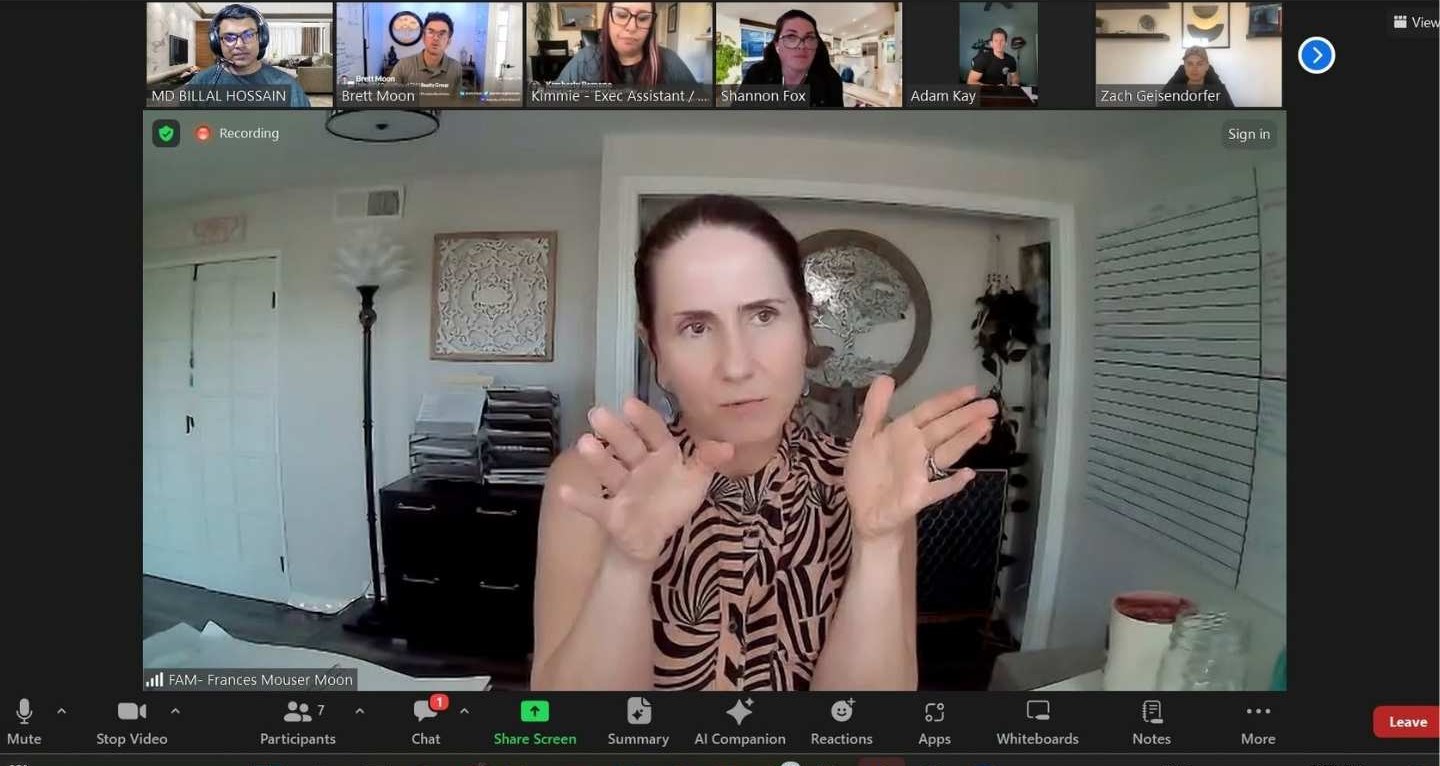
The four years I spent as Head of Graphic Design at FAM Realty Group, a top 1% California group under eXp Realty, ran that way. Agents needed listing collateral the same day, and same-day is not possible on a twelve-hour offset unless you move your day.
Is this actually your work?
The politest version is "can you walk me through your process on this piece?" It is a fair question. Portfolio theft is common enough that anyone spending real money should ask it.
The answer that satisfies people is never a claim. It is opening the source file on a call and moving things around. Nobody who stole a JPEG can do that.
The thing nobody asks, which matters most
Whether I will tell them their idea is wrong.
Early on I did not. A client would ask for the logo bigger and I made the logo bigger, because they were paying and I was young. The work got worse and the relationships got shorter.
The projects that lasted, including the ones that turned into multi-year engagements, all involved a conversation where I said the plan would not work and explained why. Sometimes I was wrong and they told me so. That is fine too.
Clients hire a contractor to execute. They keep a designer who argues once, with a reason, and then does the work either way.
What changed, and what did not
Changed: the deliverables. Flyers became company profiles and annual reports, then websites, then automation — much of it for professional and advisory firms. Nobody planned that. Clients kept asking whether I could also build the site the brochure pointed at.
Did not change: the hard part is never the design. It is getting content finished, getting a decision out of a committee, and getting somebody to say what the thing is actually for.
If you are weighing up working with somebody remote, the contact page answers the practical version of all four questions above.