I will give you the whole price table up front, because most designers make you sit through a call to hear a number. These are flat prices, agreed before anything starts, and they do not change mid-project.
The prices
| Pages | Price |
|---|---|
| 4 – 6 pages | $80 |
| 8 – 16 pages | $200 |
| 20 – 28 pages | $450 |
Every tier includes the packaged source file with fonts and links, a print-ready PDF, and revisions until you are happy with it. I do not cap revision rounds, because a capped round is an argument waiting to be scheduled.
- $80
- 4 – 6 pages
- $450
- 20 – 28 pages
- 7 days
- A real 12-page build
Two shapes of the same document
If you are bidding US federal work, you may be picturing the one-page leave-behind: core competencies, past performance, NAICS codes, one sheet a contracting officer can scan and file. That format exists and I cover it in what goes in a capability statement.
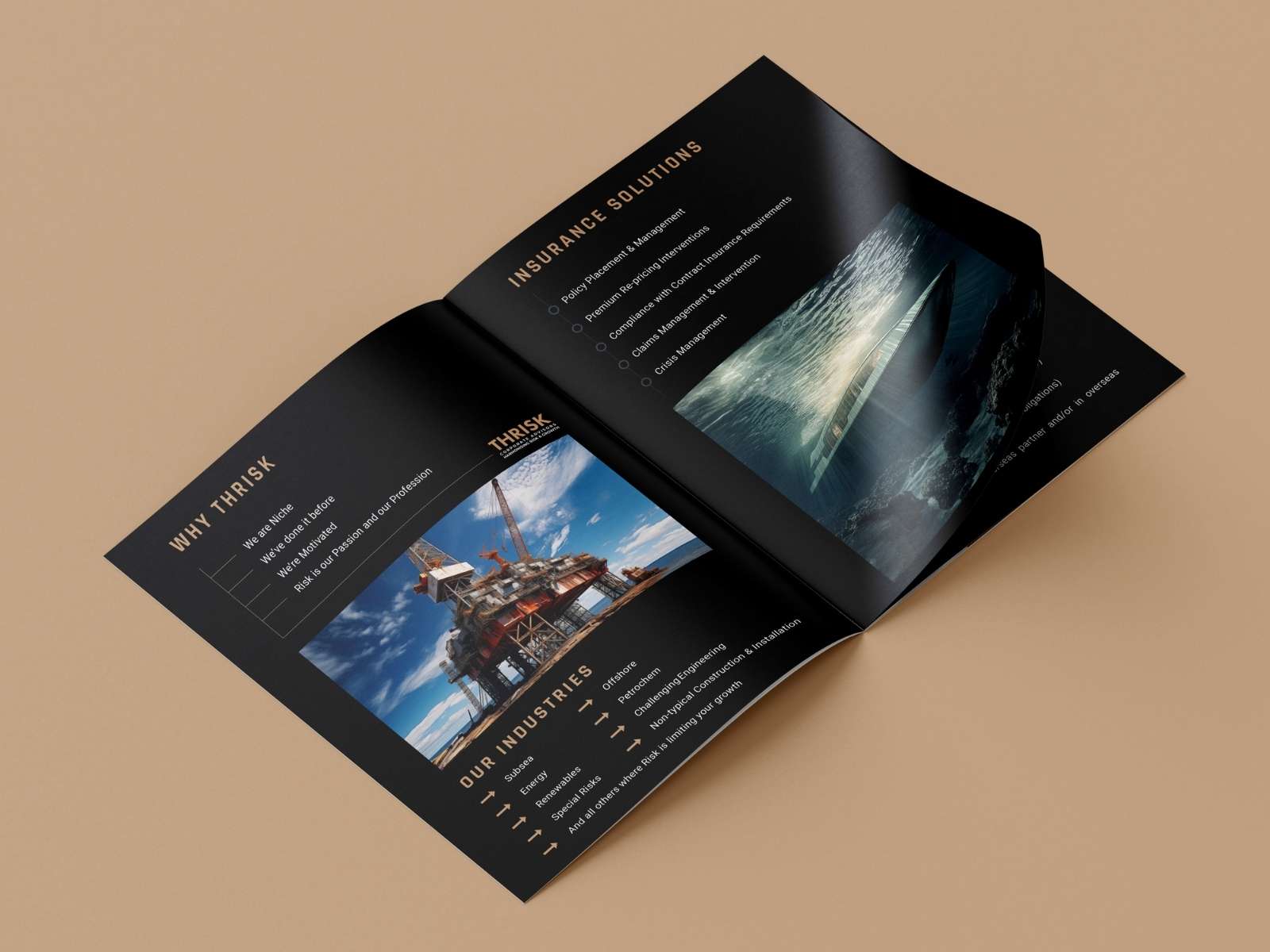
Most of what I actually design is the longer version: a multi-page capability document a firm hands to a commercial buyer, an insurer, or a partner. THRISK Corporate Advisors came to me for exactly that — a 12-page capability statement covering their risk and claims advisory work. They supplied the content, I generated the imagery, and the finished document took seven days.
What moves the timeline
Content. Not design, not page count, not how many revisions you want. Whether your services, past performance, and differentiators are written in finished sentences before the file is opened.
The prices above assume the content comes from you. A statement where the client sends a document with everything written moves fast — seven days for THRISK's twelve pages. When the same firm came back needing a 10-page strategic proposal on an urgent clock, we turned it in two days, and the only reason that was possible is that their content arrived finished.
If your content is not written, say so in the first message. Writing is a separate scope with its own honest price, not a surprise in week two.
What pushes the work up a tier
- More pages. The obvious one. A 20-page document is not a 6-page document with more staples — every spread is laid out.
- Charts built from scratch. A past-performance chart or a capability matrix is illustration work, not layout.
- No brand assets. If there is no logo file, no typeface, and no color reference, the first day goes on building a small identity before any layout happens.
- Multiple versions. A variant per agency or per market is cheaper than the first document, but it is not free.
What to have ready before you ask for a quote
- 01Core competencies, written as phrases rather than sentences.
- 02Past performance: three to five contracts or engagements with client, value, and dates.
- 03Differentiators — the part most companies skip, and the part that actually wins work.
- 04Your logo files and any brand guideline you have.
- 05A rough page count. It sets the tier, so it sets the price.
With those five things in a single document, the design is the easy part. See the capability statement service for delivery details, or run your page count through the estimator on the services page. Most of these documents are for professional and advisory firms — that page shows the wider set.